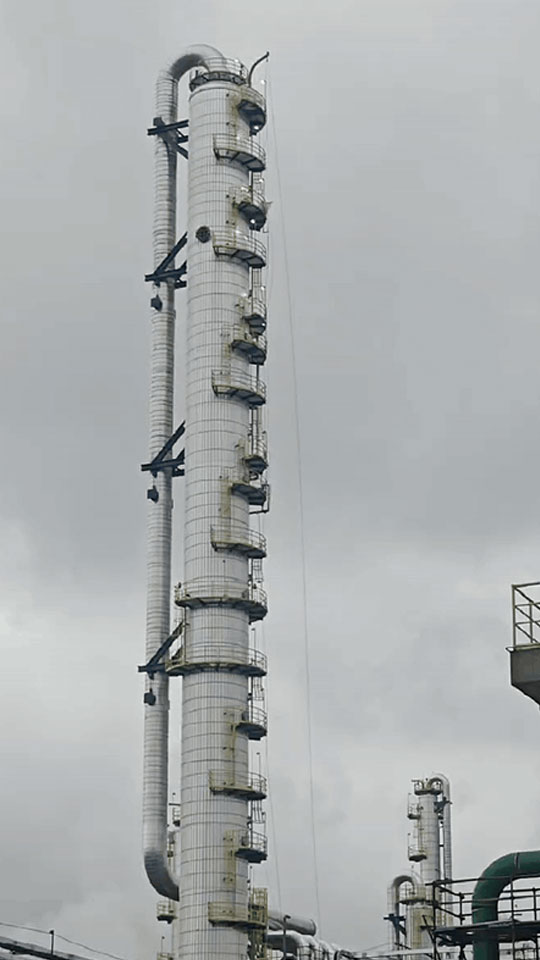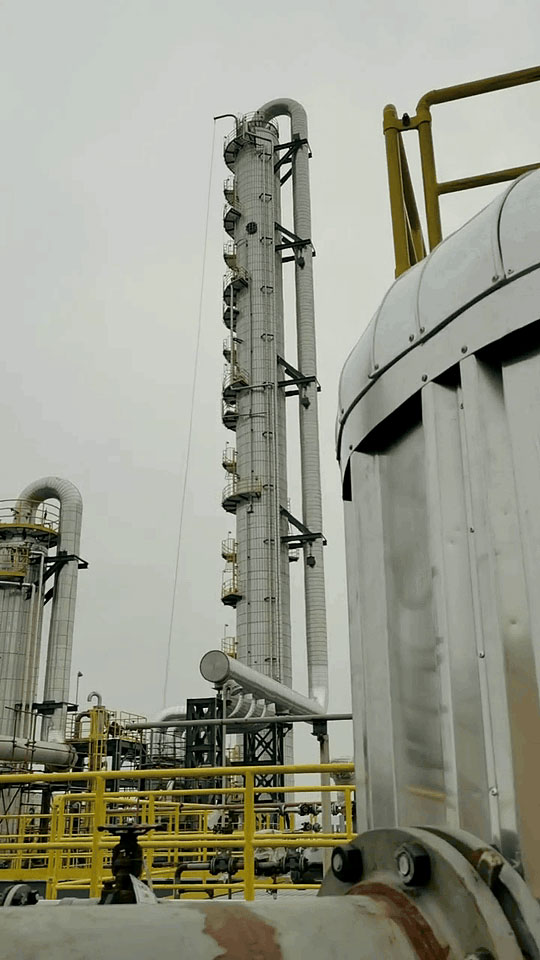


73+Cumulative Deployment of Patented Products
82.9%Amplitude Reduction at Typical Conditions
81.7%Best‑in‑Test‑Range Performance
60%+Acceleration Control Ratio
Industry challenge

Why are tall, slender, and flexible devices prone to continuous vibration?

Crosswind flow creates periodic excitation. When the excitation frequency approaches the natural frequency of the equipment, low-frequency, large-amplitude, and sustained crosswind resonance may occur.

01

Structural features

Large aspect ratio, low stiffness & low damping; static strength qualification does not ensure dynamic safety.

02

Potential risks

Weld crack, flange leakage, accessory damage, unexpected shutdown and severe safety hazards.

03

Treatment difficulties

Thickening, wind‑breakers or frames hardly achieve quantitative control of frequency & operating conditions.

Solutions provided by Damper

Full‑path workflow: Risk Identification → Custom Vibration Reduction → Monitoring‑Maintenance, delivering a complete engineering closed‑loop.

STEP 01

Risk identification

structural analysis, wind‑vibration evaluation, modal identification & fatigue check.

STEP 02

Customized vibration reduction

TMD design, structural adaptation, fabrication, installation & on‑site debugging.

STEP 03

Monitoring‑O&M

online collection, anomaly warning, trend analysis & maintenance support.

Core product

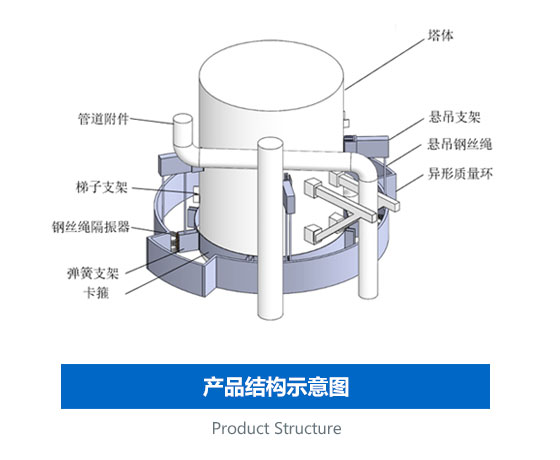
Non-standard Customized TMD Vibration Damping Device and Online Monitoring System

Tuned designs are carried out with respect to tower frequency, spatial boundaries, and site conditions, covering structural forms such as clamp-type, built-in, suspended, and integrated types, and can be linked with detection terminals and cloud platforms.
✓
One solution per equipment frequency tuning structural check against project operating conditions.
✓
From calculation to site delivery analysis, fabrication, transport, installation, commissioning verification.
Technical sources

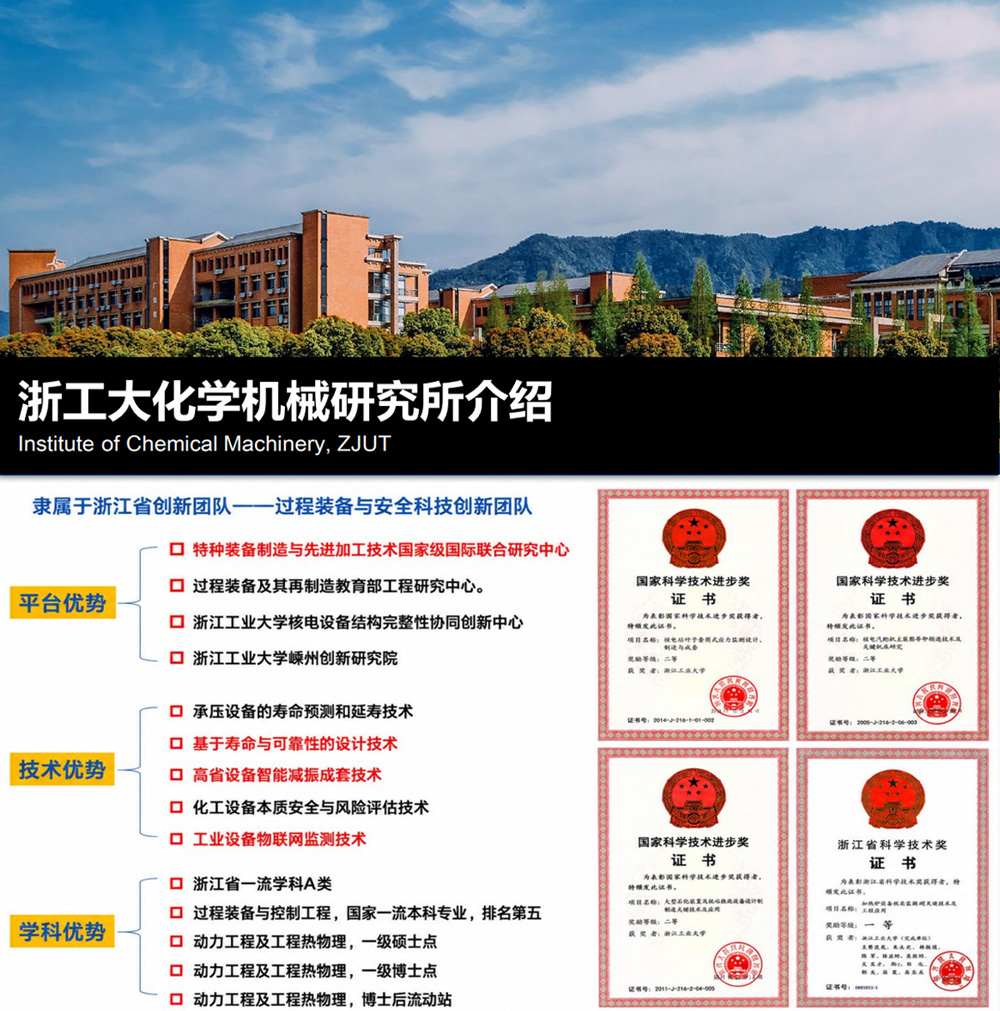
Relying on the scientific research achievements and patent authorizations of the Chemical Engineering Institute of Zhejiang University of Technology

University‑research engineering team collaboration for scheme check, product design and major project delivery.
✓
Cross‑wind resonance analysis Foundation for equipment dynamic properties wind‑response evaluation.
✓
TMD parameter design Tuned for frequency, damping ratio, mass ratio and site constraints.
✓
Fatigue life assessment Cyclic‑load evaluation for welds, connections and critical parts.
✓
Monitoring early warning Validate treatment effect with operation data for long‑term O&M.
Typical engineering case

Relying on the scientific research achievements and patent authorizations of the Chemical Engineering Institute of Zhejiang University of Technology

University‑research engineering team collaboration for scheme check, product design and major project delivery.
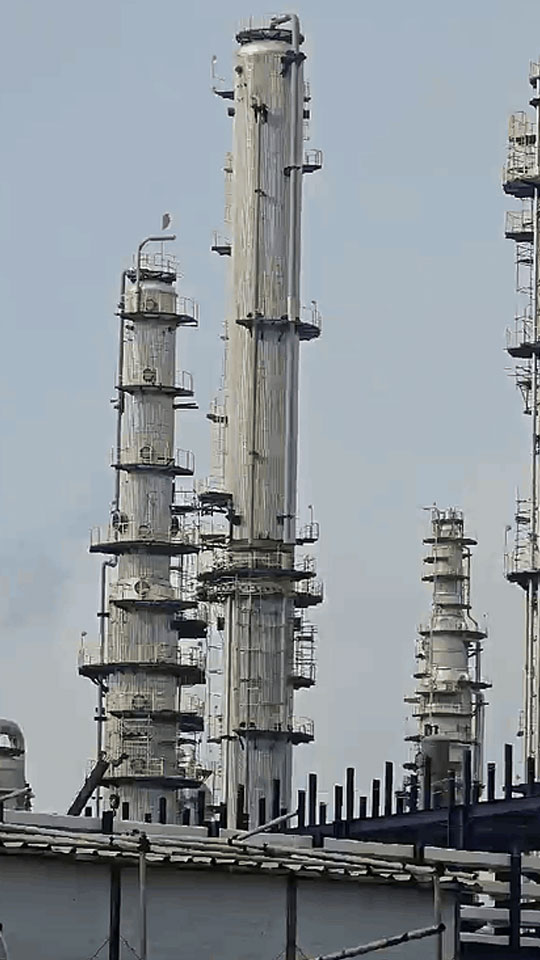
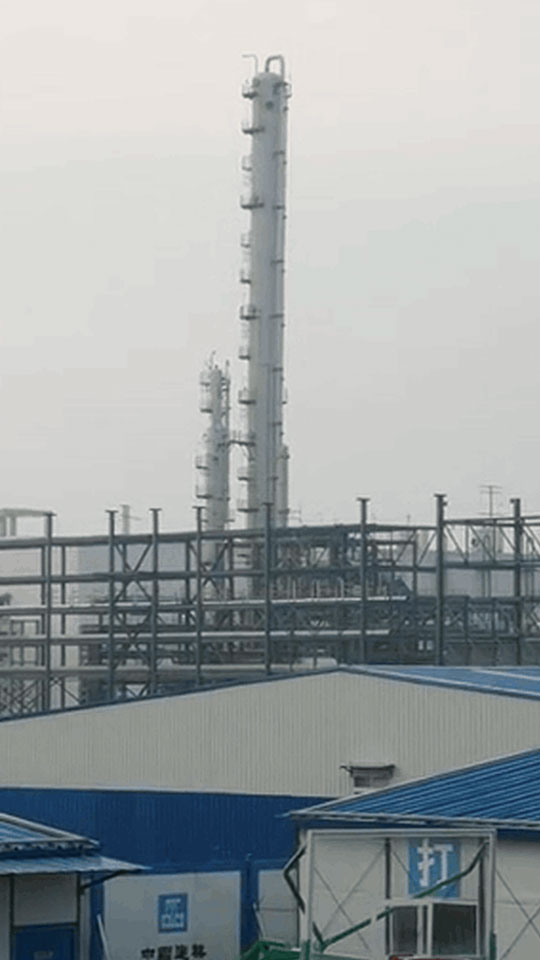
engineering application

Serving the petrochemical, chemical, and energy sectors, with experience in export projects

Hualu engineering technology co., ltd China huanqiu engineering co., ltd China National Offshore Oil Ningbo Daxie Petrochemical Co., Ltd. Zhejiang petrochemical co., ltd Shenghong petrifaction China petrifaction Guangzhou Sinopec Luoyang PetroChina Company Limited China Petrochemical Engineering Construction Company Yunbai environment Zhongsheng technology Sinopec Ningbo engineering co., ltd National Energy Group Ningxia Coal Industry Co., Ltd.

Vibration risk assessment for tall equipment in progress.?

Supply equipment parameters, field vibration conditions or monitoring data; we will help define your analysis workflow.